
ICE Release After Danbury Custody
An immigration detainer can change the practical meaning of release. CT DOC may end its custody record and transfer the person to ICE. Danbury court may show the criminal case status without showing where immigration authorities placed the person next. In that situation, the person was released from Connecticut custody but not released to the community.
The reverse is also possible. A person can have a Danbury criminal case with no ICE custody at all. Do not search the immigration locator solely because an arrest happened in Danbury. Look for a detainer field, immigration arrest, transfer notice, A-number, attorney information, or another concrete link to federal immigration custody.
Search the ICE Detainee Locator
The ICE Online Detainee Locator is intended for a person currently in ICE custody or who has been in Customs and Border Protection custody for more than 48 hours. USA.gov describes two search routes: A-number, or biographical information.
- Use the A-number when it is known, following the locator’s format instructions.
- Otherwise enter the person’s name exactly and add country of birth and date of birth.
- Check spelling, spacing, and name order before treating no result as meaningful.
- Use any returned facility information to contact the receiving detention site.
- Compare the immigration result with the separate Danbury court or CT DOC event.
The locator is not a Danbury recent-release list. It checks one person. It also does not replace immigration court records or direct contact when a transfer is too recent to appear.
ICE Search Identity Fields
Immigration searches depend on exact identity data. A name alone can be weak, especially when transliteration, two surnames, or changed name order is involved. Preserve the identity fields from official paperwork instead of guessing.
| Search route | Fields and use |
|---|---|
| A-number | The immigration identifier, generally the most direct locator key when known. |
| Biographical search | Name, country of birth, and date of birth used together. |
| Facility result | A lead to current detention location and direct facility contact. |
| No result | May reflect timing, spelling, eligibility limits, changed custody, or release. |
An A-number differs from a CT DOC number, BOP register number, police incident number, and Connecticut court docket. Keep each identifier with its agency. Mixing them can cause a false no-result or the wrong-person match.
Danbury Transfer Versus Release
A Danbury custody timeline can contain several handoffs. Police may process the arrest. The state court may set bond or remand the person. CT DOC may hold the person at Bridgeport Correctional Center or another site. ICE may then assume custody because of a detainer or separate immigration action. Each step produces a different record.
| Event | What it means |
|---|---|
| Police release | Danbury police processing ended; court or another custody system may still apply. |
| CT DOC release | State correction custody ended; a detainer may lead to another authority. |
| ICE transfer | Immigration custody began or continued, so there was no community release. |
| ICE release | ICE detention ended, though immigration proceedings or conditions may remain. |
The criminal docket and immigration case answer different questions. A closed or pending Danbury case does not prove ICE detention status. An ICE locator result does not decide the Connecticut charge. Reconcile the records without collapsing them into one release date.
Note: The receiving agency, not the prior jail or court, is the best source after a confirmed custody transfer.
Confirm an ICE Release
No locator result should be treated as the sole proof of release. First verify the identity details and allow for transfer timing. Then contact the facility shown in prior paperwork or the last known immigration custody source. Immigration counsel or the immigration court record may explain a bond, removal, release condition, or case event that a simple locator cannot.
If CT DOC detainer information suggested the handoff, preserve the state result and date. Ask CT DOC only about its own custody end and transfer record. Ask ICE or the receiving detention site about federal immigration custody. If the Danbury court docket is relevant, use it for the criminal case disposition and bond context, not as the federal locator.
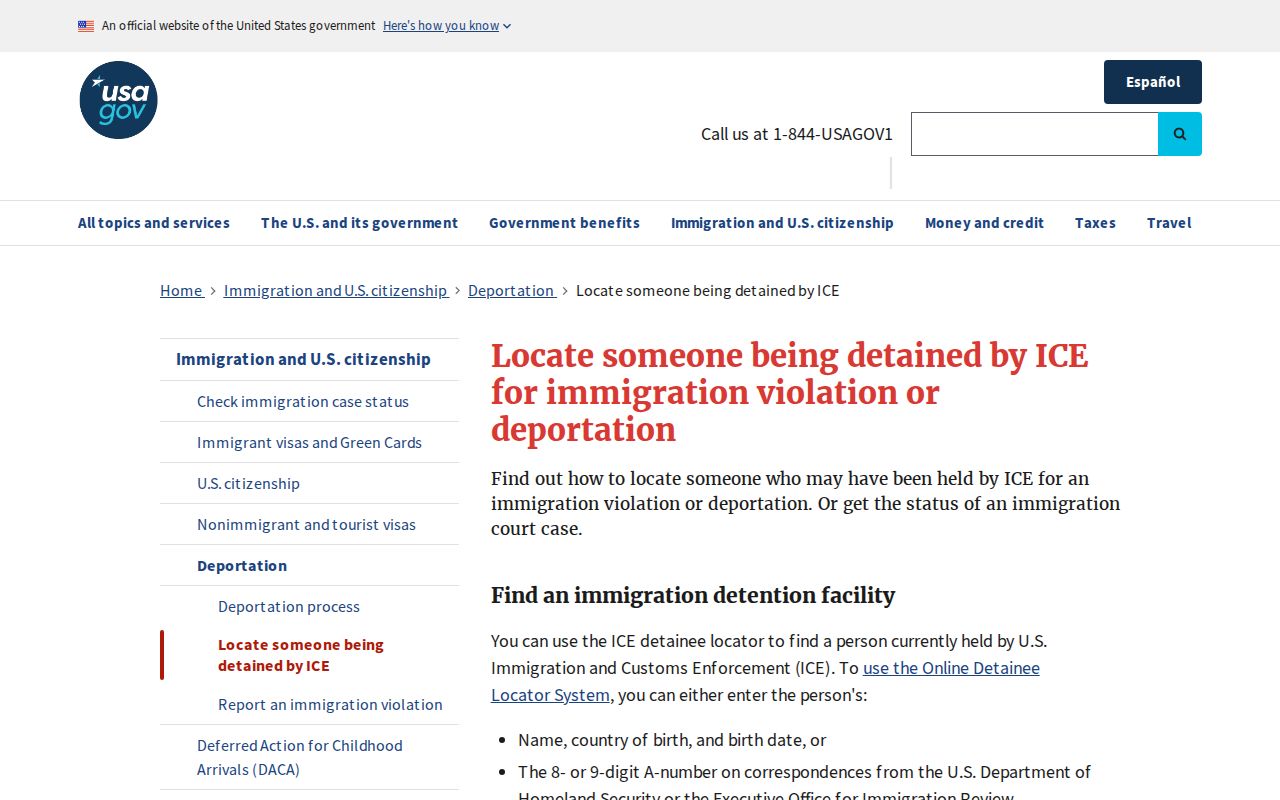
The USA.gov detained-by-ICE guide provides the official public route and search explanation:
ICE Records and Court Sources
The public locator is a status tool, not a full release record. When the question concerns the legal basis, date, receiving facility, or terms of an immigration release, use the agency or court that created that record. A request should identify the person by full name, A-number, date of birth, and known detention facility. Ask for the specific disclosable record rather than a broad history.
Immigration court information may show proceedings that continue after detention ends. A release from physical custody does not necessarily end an immigration case. Likewise, removal from the United States is not the same as a community release in Connecticut. Use exact terms stated by the official record.
- Detainer
- A request or notice that can lead one authority to hold or transfer a person for another agency.
- Transfer
- Movement from one custodian to another without return to the community.
- Immigration release
- The end of ICE detention, possibly with a case or conditions still pending.
- Removal
- A separate immigration outcome that should not be described as local release.
ICE and Federal Prison Records
ICE and the Federal Bureau of Prisons are separate federal agencies. A person leaving FCI Danbury may transfer to ICE, but the BOP locator confirms only the end or status of BOP custody. The ICE locator then becomes the correct check for immigration detention. A BOP result marked “Released” or “Not in BOP Custody” does not prove the person is outside ICE control.
Pretrial federal custody can also involve the U.S. Marshals Service before a sentenced BOP record exists. If the person was not a sentenced BOP inmate, the BOP locator may not provide the expected release entry. Federal court, marshals information, ICE, and counsel may each hold part of the timeline.
Use the Danbury release system map when the prior custodian is uncertain. It separates city police, state correction, federal prison, immigration, and court supervision paths.
ICE Locator Limits
The ICE Online Detainee Locator is designed around current detention, not a permanent archive of everyone released. A record can be unavailable because the search data is incomplete, the name format differs, the transfer is recent, the person is outside the locator’s scope, or detention has ended. None of these possibilities should be chosen without more evidence.
Privacy and case rules may also limit what staff disclose. Keep a log of the exact name spelling, A-number, search time, and last confirmed custodian. That record makes a later facility or legal inquiry more precise. Do not publish or rely on an unverified location from a third-party page.
Note: Recheck the official locator after a recent handoff and use direct agency or court records for the final custody timeline.
Trace a Danbury ICE Handoff
A clear handoff timeline starts before the ICE search. Note the Danbury arrest date and the court docket if the criminal matter is public. If CT DOC held the person, preserve the last current location, status, and detainer information shown by that system. Then record the first confirmed ICE facility or federal custody result. These dates reveal which agency controlled each phase without assuming that one release ended all custody.
CT DOC’s detainer field can be a clue, not an ICE release record. The Danbury court docket may explain bond, sentence, or case disposition, but it does not operate the federal locator. ICE or the receiving detention facility is responsible for the later immigration status. If the locator produces no result shortly after a transfer, check the spelling and A-number, then allow for the locator’s stated scope and the timing of the handoff.
After ICE detention ends, the immigration case may continue. Court dates, reporting duties, or other conditions belong to the immigration process and should be confirmed from official case documents or counsel. Avoid translating those terms into Connecticut probation or BOP supervised release. They are different legal systems with different records.
A precise statement might say that CT DOC custody ended on the state record and ICE custody was later confirmed at a receiving site. It should not say the person was released to Danbury unless an official source confirms community release. That wording preserves the difference between an administrative transfer and actual exit from detention.